Most people pay attention to their energy only when something feels unusual. A particularly productive morning feels encouraging, while an afternoon of unexpected fatigue can quickly become frustrating. Yet these isolated moments rarely tell the full story. Energy naturally changes throughout the day, and occasional highs or lows are part of everyday life.
What often matters more is the pattern that develops over weeks and months. When you begin noticing when your energy is strongest, when it consistently drops, and how those patterns change over time, you gain valuable insight into your overall lifestyle. These observations don’t provide diagnoses or immediate answers, but they can highlight habits that deserve closer attention.
Looking at daily energy this way changes the question from “Why am I tired today?” to “What does my usual energy pattern tell me about how I’m living?” That small shift encourages long-term awareness instead of reacting to every difficult day. Over time, your energy becomes less of a daily score and more of a useful source of feedback about your routines.
Your Energy Is Better Viewed as a Pattern Than a Single Measurement
It’s tempting to judge an entire week based on one difficult day. Perhaps you struggled to concentrate on Wednesday afternoon or woke up feeling unusually tired after a late night. While these experiences are memorable, they don’t necessarily reflect your overall well-being.
Think about the weather. One rainy afternoon doesn’t define an entire season, and one sunny day doesn’t mean summer has arrived. Daily energy works in a similar way. Temporary changes often happen because of work deadlines, travel, busy family schedules, or even small disruptions to your routine. Looking at those moments in isolation can easily lead to misleading conclusions.
Instead of asking whether today felt energetic enough, try noticing how most days feel over several weeks. Do you generally begin mornings with steady energy? Do afternoons consistently become more challenging? Looking at recurring patterns provides a much clearer understanding than focusing on isolated experiences.
Every Part of the Day Tells a Different Story
Energy isn’t constant from the moment you wake until bedtime. Most people experience natural changes throughout the day, and paying attention to when those changes occur can reveal useful information about everyday habits.
Morning energy often reflects how prepared your body feels for the day ahead. Some people wake feeling alert within minutes, while others need more time before they feel fully focused. Observing this pattern over several weeks may help you understand whether your morning routine generally supports a comfortable start to the day.
Midday often brings another noticeable shift. After several hours of work, study, or household responsibilities, concentration may remain steady or begin to fade. Rather than assuming this always reflects a lack of motivation, it can be helpful to consider how your morning activities, meal timing, and workload may have contributed to the way you feel.
Afternoons are particularly interesting because this is when many people notice recurring changes in attention and productivity. If your energy regularly declines during the same period, it doesn’t automatically suggest a problem. Instead, it creates an opportunity to review broader lifestyle habits that may be influencing that pattern.
Evening energy can also provide useful observations. Some people naturally feel relaxed while others experience a second burst of activity later in the day. Understanding these tendencies may help explain why certain routines feel easier to maintain than others without assuming that one pattern is better than another.
Looking Beyond Sleep Alone
When people feel low on energy, sleep is usually the first explanation that comes to mind. While consistent sleep plays an important role in overall well-being, it rarely tells the complete story. Two people may sleep for similar amounts of time yet experience very different energy levels during the day because many everyday habits work together.
Daily movement is one example. Long periods of sitting may leave some people feeling sluggish even if they slept well the night before. Others may notice that taking regular walking breaks helps them feel more refreshed throughout the day without making any dramatic changes to their schedule.
Eating habits can also influence how energy feels over time. Rather than focusing on individual meals, it may be more useful to observe whether your overall eating routine supports steady energy across the week. Skipping meals, eating at inconsistent times, or relying heavily on convenience foods during particularly busy periods may create patterns that only become noticeable when viewed over several weeks.
Workload deserves consideration as well. Mental fatigue often develops gradually, especially during periods of sustained concentration or continuous decision-making. Feeling tired after demanding days doesn’t necessarily mean your routine is unhealthy. However, if demanding weeks consistently leave you feeling drained with little opportunity to recover, that recurring pattern may be worth exploring.
Energy Often Reflects How Well Your Routine Fits Your Life
One reason daily energy is such a useful observation is that it brings together many different parts of your lifestyle. Instead of viewing sleep, movement, nutrition, and work as completely separate areas, energy reflects how they interact during everyday life.
Imagine two weeks that include the same number of working hours. During the first week, meals happen at fairly regular times, short movement breaks are included throughout the day, and evenings allow time to relax before bed. During the second week, lunch is frequently skipped, work continues late into the evening, and there is little opportunity to step away from a desk. Even if both weeks appear similar on paper, your energy may feel very different.
Looking at energy through this broader perspective encourages curiosity rather than quick assumptions. Instead of searching for one single explanation, you begin appreciating how small everyday habits combine to influence how you feel across weeks and months.
Weekly Energy Trends Tell a Bigger Story
Looking at your energy over the course of a week is often far more informative than focusing on a single afternoon or one difficult morning. Individual days are influenced by countless factors—unexpected meetings, poor weather, family commitments, travel, or simply a busier schedule than usual. While those experiences can temporarily affect how you feel, they don’t always reflect your overall well-being.
A weekly review creates enough distance to recognize patterns that might otherwise go unnoticed. Perhaps your energy is consistently strongest earlier in the week but gradually declines by Friday. Maybe weekends leave you feeling refreshed, yet Monday mornings always feel rushed because your evening routine changes on Sundays. These observations become easier to identify when several days are viewed together rather than separately.
This broader perspective also helps you avoid unnecessary concern. Instead of worrying about one unusually tired day, you begin asking whether the same experience keeps appearing week after week. That distinction often leads to more thoughtful decisions and a clearer understanding of your everyday routine.
Energy Can Help You Recognize Lifestyle Patterns
Your daily energy isn’t simply a reflection of how much sleep you got the night before. It’s often the combined result of many habits working together over time. Observing when your energy changes can encourage you to review different parts of your lifestyle without immediately assuming one single cause.
For example, if you regularly feel mentally drained during long afternoons, it may be worth looking at how your workday is structured, whether you spend long periods sitting without breaks, or whether your meals are inconsistent on particularly busy days. Likewise, if mornings consistently feel calm and productive, consider which evening habits may be supporting that experience.
The goal isn’t to search for perfect explanations every time your energy changes. Instead, these recurring patterns become useful reminders to examine the routines that shape your daily life. Small observations often lead to practical improvements because they help you understand where your time and energy are being spent.
A Simple Way to Review Your Energy Patterns
Rather than trying to analyze every detail, use your observations as starting points for reflection.
| Energy Pattern Noticed | Lifestyle Area Worth Reviewing |
|---|---|
| Consistently tired in the morning | Evening routine, bedtime consistency, and overnight rest habits. |
| Afternoon energy drops most weekdays | Meal timing, workload, movement breaks, or hydration habits. |
| Better energy on weekends | Differences between weekday and weekend schedules. |
| Feeling mentally exhausted after work | Workload, stress management, and opportunities for recovery. |
| Energy varies significantly from day to day | Overall routine consistency rather than any single habit. |
These examples don’t provide diagnoses or definite explanations. They simply encourage thoughtful observation so you can better understand how different parts of your routine may be connected.
Avoid Looking for One Simple Cause
One of the most common mistakes people make is assuming every change in energy has a single explanation. If they feel tired, they immediately blame sleep. If they feel energized after exercising once, they assume that one workout explains everything. Real life is usually much more complex.
Energy is influenced by multiple everyday factors that interact with one another. Sleep, movement, nutrition, workload, emotional demands, recovery, and daily schedules all contribute in different ways. Sometimes several small changes occurring together have a greater influence than one major habit on its own.
Approaching your observations with curiosity instead of certainty makes your conclusions more balanced. Rather than asking, “What caused this?” it can be more helpful to ask, “What changed recently that might have contributed?” This mindset encourages gradual learning instead of quick assumptions.
Use Energy as Feedback, Not as a Judgment
It’s easy to label a day as either productive or unproductive based entirely on how energetic you felt. However, energy naturally fluctuates, and expecting every day to feel the same often creates unrealistic expectations. Some days will simply require more effort because of circumstances beyond your control.
Instead of treating low-energy days as failures, view them as information. They may highlight the need for better recovery, a lighter schedule, or a closer look at how your routine has changed recently. Likewise, high-energy days provide an opportunity to notice which habits may be supporting that positive experience so you can continue building on them.
Using energy as feedback removes unnecessary pressure. Rather than chasing perfect days, you begin developing a lifestyle that supports steadier well-being over the long term.
Frequently Asked Questions
Should I track my energy every day?
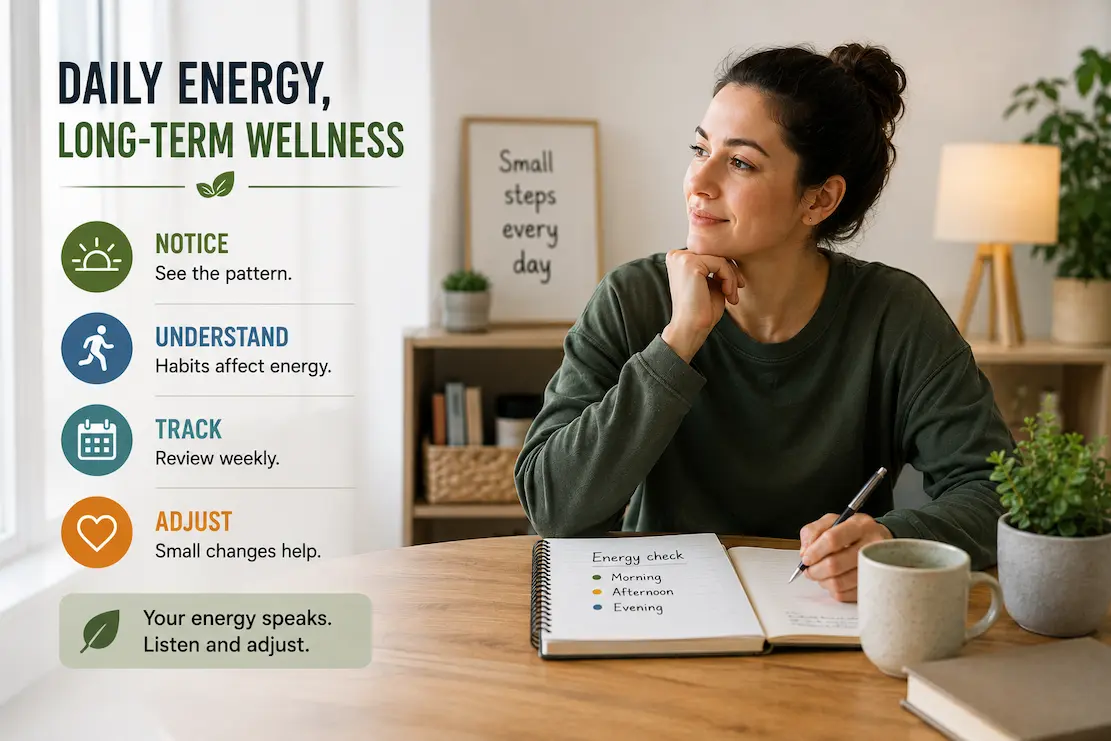
Many people find that a brief daily observation is enough. Recording a few words about your overall energy can make it easier to recognize meaningful patterns when reviewing several weeks instead of relying on memory.
Is it normal for energy to change throughout the day?
Yes. Most people experience natural changes in alertness and concentration as the day progresses. Looking for recurring patterns over time is generally more useful than expecting your energy to remain constant from morning until night.
What should I do if my energy suddenly changes?
Occasional changes are a normal part of everyday life and may simply reflect temporary circumstances. If a noticeable change continues or is accompanied by concerning symptoms, it’s appropriate to seek advice from a qualified healthcare professional rather than relying only on personal observations.