
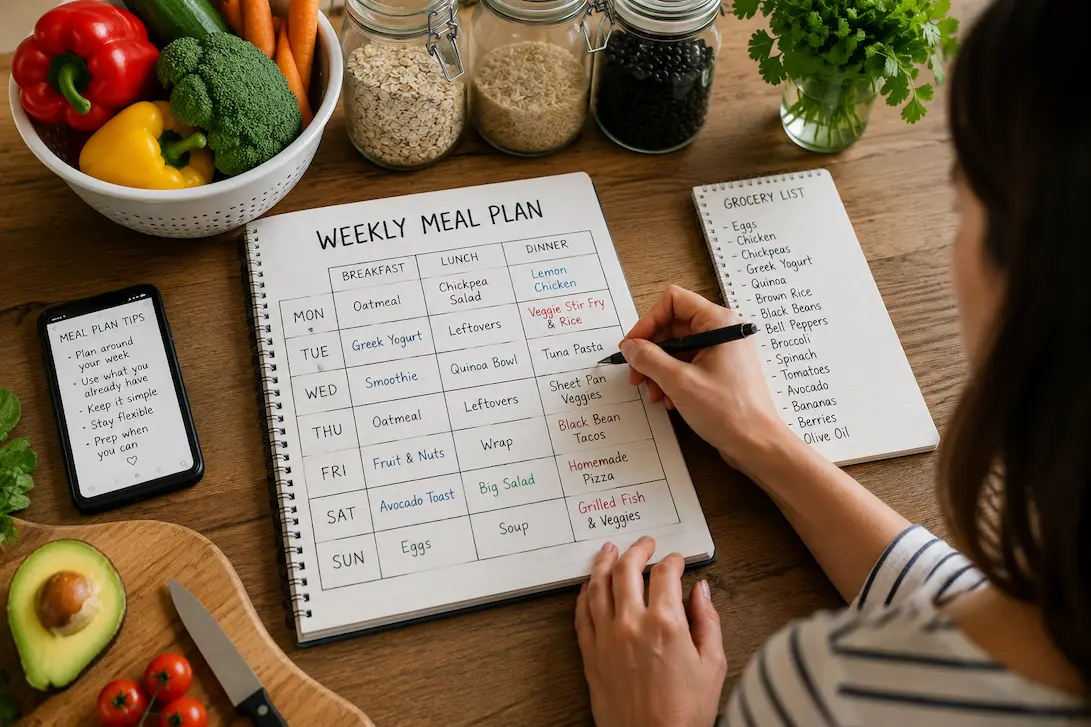
It’s often not a lack of nutritional knowledge that leads to rushed food decisions—it’s a lack of preparation. After a long day at work, finishing household responsibilities, or dealing with unexpected changes to your schedule, deciding what to cook can feel like one more task competing for your attention. In those moments, convenience naturally becomes more appealing than careful planning.
Many people experience this cycle repeatedly. The week begins with good intentions, but by the middle of the week, plans become busier than expected. Meals that seemed realistic on Sunday suddenly feel too time-consuming on Wednesday evening, leading to takeaway orders, packaged convenience foods, or skipping meals altogether. These decisions usually don’t reflect a lack of care about healthy eating; instead, they often result from making choices while tired and under time pressure.
A simple weekly meal planning system helps reduce this daily decision-making. Instead of asking, “What should I eat tonight?” every evening, you spend a little time thinking ahead. The purpose isn’t to create a rigid menu that must be followed perfectly. It’s to make everyday food choices easier by preparing for the reality that some days will be busier than others.
Why Detailed Meal Plans Often Fail
Many meal plans look impressive on paper but become difficult to follow in everyday life. Planning a different recipe for every breakfast, lunch, and dinner throughout the week may seem organized at first, yet it often requires more preparation, shopping, and cooking than many busy adults can realistically maintain.
Another challenge is assuming every day will unfold exactly as expected. Meetings run late, family plans change, errands take longer than anticipated, and unexpected invitations appear. When a detailed meal plan leaves little room for flexibility, even small schedule changes can disrupt the entire week’s planning.
Complicated recipes can also become a barrier during busy weekdays. A meal requiring extensive preparation may feel enjoyable on a relaxed weekend but much less appealing after an exhausting workday. Over time, repeatedly choosing plans that don’t match your available time often leads to frustration rather than consistency.
A sustainable planning system accepts that real life is unpredictable. Instead of trying to control every meal, it creates enough structure to simplify decisions while remaining flexible enough to adapt when plans inevitably change.
Start by Planning Your Week, Not Your Menu
Before deciding what you’ll eat, take a few minutes to look at the week ahead. Understanding your schedule often provides more useful information than immediately searching for recipes. Some evenings may be relatively relaxed, while others include late meetings, family commitments, or travel that reduce the time available for cooking.
Once you recognize which days are likely to be busiest, planning becomes much more practical. Meals requiring more preparation can be reserved for quieter evenings, while simpler options naturally fit days when time is limited. This approach reduces the pressure of trying to cook elaborate meals during periods when convenience is likely to win.
Looking at the week as a whole also helps identify opportunities to prepare ahead. If Sunday afternoon is usually less busy, it may become the ideal time to organize ingredients or prepare components that make weekday cooking quicker. Rather than reacting to each day separately, you’re making decisions with the entire week in mind.
Organize Meals by Purpose Instead of Recipes
One way to simplify planning is to stop thinking about individual recipes first. Instead, group meals according to the role they play during the week. This creates flexibility because the category remains the same even if the specific meal changes.
Quick Weeknight Meals
These are the meals designed for evenings when time and energy are limited. Their purpose isn’t to impress or introduce new cooking techniques—they simply make it easier to prepare something satisfying without spending a long time in the kitchen.
Knowing that quick meals already have a place in your weekly plan reduces the temptation to rely entirely on convenience foods during particularly demanding days. Because these meals are expected rather than treated as exceptions, they become part of a sustainable routine.
Leftover-Friendly Meals
Some meals naturally provide enough servings for more than one occasion. Planning these intentionally can reduce both cooking time and food waste during the week. Instead of viewing leftovers as an afterthought, they become part of your overall meal strategy.
This approach is especially useful during busy workweeks. Preparing one larger meal can provide another lunch or dinner later in the week, reducing the number of cooking sessions without sacrificing variety.
Flexible Ingredient Meals
Not every meal needs a strict recipe. Some dinners can be built using ingredients you already have available, allowing small adjustments depending on what’s left in the refrigerator or pantry. This flexibility helps reduce unnecessary grocery shopping while making better use of ingredients before they spoil.
Planning a few flexible meals each week also makes unexpected schedule changes easier to manage. If one planned dinner no longer suits your evening, another option can often be created using ingredients that are already available.
Meals for Slower Evenings
Some days naturally provide more time for cooking. Rather than trying to prepare every meal as quickly as possible, reserve more involved recipes for evenings when cooking can become part of a relaxed routine instead of another source of pressure.
This balanced approach allows you to enjoy cooking without expecting every weekday to provide the same amount of free time. Over several weeks, it creates a meal planning system that reflects your actual lifestyle rather than an idealized schedule.
A Simple Planning Process That Takes Only a Few Minutes
An effective meal planning system doesn’t require hours of preparation every weekend. In many households, spending ten or fifteen minutes organizing the week is enough to remove much of the uncertainty surrounding everyday meals.
Start by reviewing your upcoming schedule and identifying the evenings likely to be busiest. Next, check what ingredients are already available before making a shopping list. This simple habit helps reduce unnecessary purchases while making it easier to plan meals around food you already have.
From there, match your meal categories to your schedule rather than assigning detailed recipes to every day. Include at least one flexible option that can easily replace another meal if plans change unexpectedly. By keeping the system adaptable, you avoid the frustration of feeling that the entire plan has failed because one evening didn’t go exactly as expected.
Make Your Plan Flexible Instead of Perfect
One of the biggest reasons people stop following meal plans is the belief that every meal must happen exactly as originally planned. In reality, unexpected changes are part of everyday life. A meeting may run late, a family member might suggest eating out, or you may simply feel too tired to prepare the dinner you had planned several days earlier.
Rather than viewing these moments as failures, treat your meal plan as a guide that can adjust throughout the week. If Wednesday’s planned dinner works better on Thursday, simply swap the meals. If fresh ingredients need to be used sooner than expected, reorganize the remaining meals around them. Flexibility allows the plan to continue serving you instead of becoming another source of stress.
A planning system should make life easier, not create additional pressure. When adjustments become part of the process, you’re much more likely to continue planning from one week to the next.
An Example of a Practical Weekly Planning System
Instead of assigning complicated recipes to every day, organize your week according to your expected schedule and available time.
| Day | Schedule | Meal Strategy |
|---|---|---|
| Monday | Busy workday | Quick meal using simple ingredients |
| Tuesday | Normal evening | Prepare a balanced home-cooked dinner |
| Wednesday | Late commitments | Leftover-friendly meal or prepared option |
| Thursday | Regular schedule | Flexible meal using available ingredients |
| Friday | Busy or social plans | Simple meal with minimal preparation |
| Saturday | More free time | Try a new recipe or prepare larger portions |
| Sunday | Planning day | Review next week’s schedule and organize groceries |
Notice that the table focuses on strategy, not specific recipes. This approach makes it much easier to adapt when plans change while still reducing last-minute food decisions.
Keep a Reliable Backup Option
Even the best meal plan won’t prevent every unexpected situation. That’s why having a few dependable backup meals can make such a difference. These aren’t emergency foods—they’re simple, familiar meals that require little preparation and use ingredients you usually keep at home.
Knowing that a practical alternative is always available reduces the temptation to order takeout simply because you haven’t decided what to cook. It also removes much of the stress that comes from feeling as though one missed meal has disrupted your entire weekly plan.
Your backup option doesn’t need to be the same every week. The important thing is having something realistic that fits your household, your schedule, and the ingredients you commonly buy.
Review What Worked Before Planning Again
Meal planning becomes more effective when you treat it as an ongoing process rather than a fixed schedule. Before creating the next week’s plan, spend a few minutes thinking about what worked well and what didn’t.
Perhaps quick meals were used more often than expected because work became busier. Maybe you bought ingredients that weren’t used before they expired, or you discovered that preparing larger portions on weekends saved valuable time during the week. These observations help you build a planning system that gradually becomes more practical.
There’s no need to redesign everything each week. Small adjustments based on real experience usually create a stronger system than constantly starting from scratch with completely different plans.
Common Meal Planning Mistakes to Avoid
Even a simple planning system can become frustrating if expectations are unrealistic. Being aware of common mistakes makes it easier to build a routine that lasts.
- Planning complicated meals for your busiest evenings.
- Shopping before checking what you already have at home.
- Buying ingredients without a clear purpose.
- Expecting every meal to follow the original schedule perfectly.
- Ignoring leftovers that could simplify another day’s cooking.
- Preparing more food than your household is likely to use.
Avoiding these habits doesn’t require perfection. It simply helps create a planning system that better matches everyday life.
Frequently Asked Questions
How much time should weekly meal planning take?
For many households, spending around 10 to 20 minutes reviewing the week’s schedule, checking available ingredients, and creating a simple grocery list is enough to make everyday meal decisions much easier.
Do I need to prepare every meal in advance?
Not at all. Many people benefit more from planning their meals than preparing every dish ahead of time. Knowing what you’ll cook and having the necessary ingredients available is often enough to reduce last-minute decisions.
What if my plans change during the week?
That’s completely normal. A flexible meal planning system allows meals to be rearranged or replaced when necessary. The objective is to reduce stress and simplify choices, not to follow a schedule perfectly.
Conclusion
A successful weekly meal planning system isn’t built on perfectly organized menus or complicated preparation sessions. It’s built on understanding your schedule, recognizing which days are likely to be busy, and creating enough flexibility to adapt when plans inevitably change. By thinking in terms of meal strategies instead of rigid recipes, you reduce the number of stressful decisions that often lead to last-minute food choices.
Over time, this approach becomes less about planning every detail and more about creating a routine that supports everyday life. A few minutes of thoughtful preparation each week can make balanced meals easier to manage, reduce unnecessary food waste, and bring more confidence to your daily food choices—without expecting every week to unfold exactly as planned.