Daily activity tracking has become associated with expensive smartwatches, complicated fitness apps, and endless charts that many people stop looking at after a few weeks. In reality, keeping track of your daily movement doesn’t have to involve technology or consume valuable time. A simple system that fits naturally into your routine is often easier to maintain than one that demands constant attention. The goal isn’t to measure every step with perfect accuracy—it is to notice patterns that help you make better daily decisions.
Many people abandon activity tracking because they try to record too much information from the very beginning. They count every step, calorie, minute of exercise, and even sleep quality, only to feel overwhelmed after a few days. Consistency matters far more than collecting hundreds of numbers that never lead to action. A five-minute tracking habit can reveal meaningful trends over weeks and months while remaining easy enough to continue long term.
This guide explains how to build a practical daily activity tracking system that works whether you exercise regularly or simply want to become more aware of your movement throughout the day. Instead of focusing on complicated metrics, you’ll learn how to record information that actually helps you understand your daily habits and make gradual improvements.
Why Most Daily Activity Tracking Systems Fail
One of the biggest reasons people stop tracking their activity is that they mistake data collection for progress. Recording numbers can feel productive, but if those numbers never influence your choices, the habit quickly loses its purpose. Many tracking methods ask people to monitor far more information than they genuinely need, making the process feel like another daily task rather than a helpful routine.
Another common issue is setting unrealistic expectations. Someone might promise themselves they’ll log every walk, workout, stair climb, and calorie burned from the first day. After missing one or two entries, they often feel they’ve failed and abandon the system completely. A sustainable routine should allow for busy days, unexpected interruptions, and occasional missed entries without making the entire process feel broken.
Simple systems are surprisingly effective because they reduce decision fatigue. When you only need a few minutes to complete your daily record, you’re much more likely to continue doing it for months instead of days. Long-term consistency provides far more useful insights than a perfectly detailed log that only lasts a week.
The Purpose of Tracking Isn’t Perfection
Many people believe activity tracking exists to achieve a perfect number of daily steps or complete a specific amount of exercise every single day. While goals can certainly be motivating, the real purpose of tracking is to understand your personal routine. Once you begin noticing consistent patterns, making small improvements becomes much easier than trying to change everything at once.
For example, you might discover that Mondays naturally involve more walking than Fridays, or that your activity drops significantly whenever your work schedule becomes busy. These observations are often more valuable than knowing the exact number of calories burned because they highlight habits you can realistically adjust.
Tracking also encourages awareness. It’s common to assume you’ve been active simply because you felt busy all day, yet your routine may have involved very little actual movement. Seeing your daily records over several weeks helps separate assumptions from reality, allowing you to build healthier routines based on consistent observations instead of memory alone.
A Five-Minute Tracking Routine That Actually Fits Everyday Life
A practical activity tracking system should fit into your existing routine rather than forcing you to redesign your entire day. The easiest approach is choosing one consistent time to review your activity, such as after dinner, before bedtime, or while preparing for the next morning. Linking the habit to something you already do makes it much easier to remember without relying on reminders.
Instead of opening multiple apps or searching through different devices, keep all your information in one place. This could be a notebook, a simple spreadsheet, or a notes application on your phone. The format matters far less than consistency. If recording your activity feels effortless, you’ll be much more likely to continue the habit through busy weeks and changing schedules.
During those five minutes, focus only on information that helps you understand your day rather than creating a detailed report. Recording a few meaningful observations consistently is far more useful than collecting dozens of measurements that you’ll never review again.
Suggested Daily Activity Checklist
| Daily Observation | What to Record |
|---|---|
| Overall movement | Low, Moderate, or High |
| Planned exercise | Completed, Partial, or Missed |
| Walking | Approximate time or distance |
| Long sitting periods | Estimated hours |
| Energy level | Morning and evening rating |
| Notes | Anything unusual about the day |
This small checklist can usually be completed in less than five minutes while still providing enough information to identify meaningful weekly patterns.
Focus on Patterns Instead of Individual Days
One inactive day rarely means your overall routine is unhealthy, just as one active day doesn’t automatically create lasting fitness. The value of tracking comes from identifying repeating behaviors over time. Looking at an entire week’s worth of information often reveals habits that are impossible to notice by focusing on individual days.
For instance, your records may show that weekends consistently involve much more movement than weekdays, or that your activity decreases every time your workload increases. These recurring patterns create opportunities for realistic improvements because they point toward situations you can prepare for rather than isolated events that happened only once.
Reviewing weekly trends also prevents unnecessary frustration. Everyone experiences days when exercise isn’t possible because of travel, illness, family commitments, or unexpected work. Instead of treating those days as failures, viewing them within the context of an entire week keeps your attention on overall consistency rather than short-term perfection.
Keep Your Activity Records Easy to Review
A tracking system becomes far more useful when you can understand your progress at a glance. If reviewing your notes requires reading dozens of detailed entries, you’re unlikely to revisit them regularly. Organizing your records in a consistent format allows you to identify changes quickly without spending additional time analyzing every detail.
Many people find success by using the same categories each day while leaving space for short observations. Over several weeks, those brief notes begin telling a much larger story about work schedules, motivation, weather, travel, sleep quality, and other factors that naturally influence daily movement. This combination of simple ratings and occasional comments creates a practical record that remains useful long after individual days have been forgotten.
Even if your tracking method changes over time, keeping the overall structure familiar helps maintain the habit. Small improvements to your system are perfectly normal, but constantly redesigning it often becomes another reason to stop tracking altogether.
Common Mistakes That Make Activity Tracking Less Useful
One of the easiest mistakes to make is tracking numbers without ever reviewing them. Many people faithfully fill in an app or notebook every day, yet they never look back to see what those entries reveal. A tracking system should help you recognize habits, not simply become another daily task to complete. Spending a few minutes at the end of each week reviewing your notes often provides more value than recording additional details every day.
Another common problem is changing the tracking method too often. It is tempting to download a new app, try a different spreadsheet, or switch to another notebook because it looks more organized. While small improvements are perfectly reasonable, constantly replacing your system makes it difficult to compare progress over time. Consistency creates meaningful records, whereas frequent changes usually create incomplete ones.
People also tend to judge themselves too harshly after missing a few days. Activity tracking is not a competition, nor is it a test that requires a perfect score. Missing an entry occasionally should simply mean continuing the next day. Long-term records always contain busy weeks, holidays, travel, and unexpected interruptions, and those periods are part of real life rather than signs of failure.
Turn Daily Records Into Weekly Insights
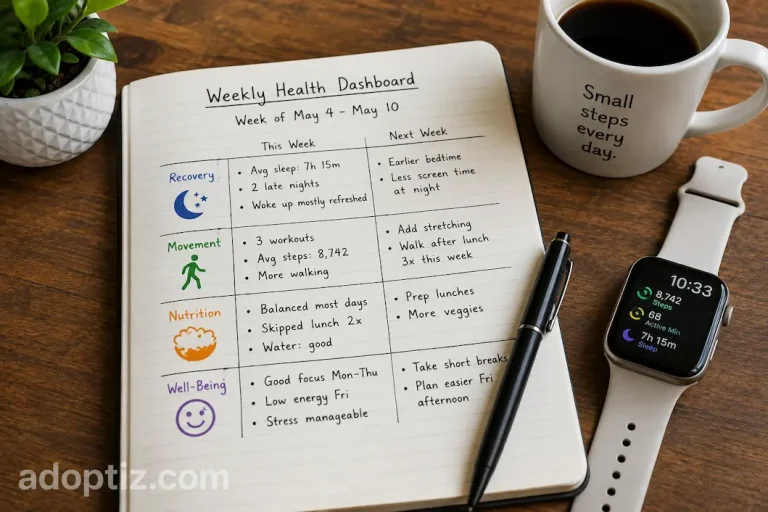
Daily tracking becomes much more valuable when combined with a short weekly review. Instead of only asking whether you exercised each day, take a broader look at your routine. Patterns often become obvious once seven days of information are viewed together, allowing you to identify what supports your activity levels and what consistently reduces them.
During your weekly review, look for repeated situations rather than isolated events. Perhaps your activity drops on days filled with meetings, or maybe you naturally move more when you prepare your meals in advance. These connections help you make practical adjustments because they focus on habits you can actually influence instead of chasing perfect numbers.
You do not need a complicated report to benefit from this review. A few thoughtful questions are often enough.
- Which day was my most active?
- Which day involved the longest sitting periods?
- What helped me stay active?
- What made movement more difficult?
- What small improvement can I try next week?
Answering these questions regularly creates a cycle of observation and improvement that is far more sustainable than constantly increasing daily goals.
A Monthly Review Helps You Notice Long-Term Progress
Weekly reviews are useful for spotting short-term trends, but monthly reviews provide a much clearer picture of your overall lifestyle. Four weeks of records can reveal gradual improvements that might otherwise go unnoticed. You may discover that your average movement has increased naturally or that long periods of sitting have become less frequent without consciously trying to change them every day.
Monthly reviews also help you recognize seasonal changes and lifestyle events. Work deadlines, vacations, weather conditions, or family commitments often affect activity levels in predictable ways. Instead of feeling discouraged during these periods, your records help you understand that temporary changes are part of a long-term journey rather than permanent setbacks.
Keeping a simple monthly summary can make future planning much easier.
| Monthly Review Area | Questions to Ask Yourself |
|---|---|
| Overall Activity | Was I generally more active than last month? |
| Exercise Routine | Which workouts did I complete consistently? |
| Daily Movement | Did I reduce long sitting periods? |
| Energy Levels | Did I notice improvements in daily energy? |
| Next Month’s Goal | What is one realistic habit to improve? |
A table like this turns your records into useful information instead of leaving them as isolated daily entries.
Connect Activity Tracking With Other Healthy Habits
Daily movement is only one part of a healthy routine. Activity levels are often influenced by sleep quality, eating habits, hydration, and stress. Looking at these factors together provides a much more complete understanding of your lifestyle than focusing on movement alone.
For example, you may notice that poor sleep is followed by lower activity the next day, or that preparing balanced meals makes it easier to stay energized throughout the afternoon. These observations do not require medical knowledge—they simply help you understand how your everyday habits interact with one another. Small lifestyle connections often explain changes in activity more effectively than any single measurement.
This broader perspective also prevents unrealistic expectations. If your records show reduced activity during particularly stressful weeks, your goal may be maintaining regular movement rather than trying to achieve personal bests. A practical tracking system adapts to real life instead of expecting every day to look the same.
Adjust Your Tracking System as Your Routine Changes
No activity tracking method should remain completely unchanged forever. Starting a new job, moving home, caring for family members, or changing your daily schedule naturally affects how you move throughout the day. Rather than abandoning your system, adjust it so it continues reflecting your current lifestyle.
Someone working from home may benefit from tracking sitting time more closely, while a person with an active job may focus more on structured exercise and recovery. The information you record should support your current goals instead of following a rigid format that no longer feels relevant. Making thoughtful adjustments keeps the system practical without losing the consistency built over previous months.
At the same time, avoid adding too many new measurements simply because they are available. Every extra category requires additional attention, and eventually the process may become too complicated to maintain. The simplest system that consistently provides useful information is usually the most effective one.
Building a Habit That Lasts
Successful activity tracking depends less on motivation and more on routine. Choosing a fixed time each day, keeping your records in one place, and reviewing them regularly creates a habit that becomes increasingly automatic. Once the process requires very little effort, maintaining it feels much easier than constantly starting over with new methods.
Another helpful approach is celebrating consistency rather than perfect results. Completing your daily record for several weeks is already an achievement because it demonstrates awareness and commitment. Over time, those small daily actions build a valuable collection of information that can guide future decisions about movement, exercise, and overall well-being.
Remember that your tracking system is there to support you, not to judge you. It should provide encouragement, reveal useful patterns, and make healthy choices feel more manageable instead of creating unnecessary pressure.
Frequently Asked Questions
Is a fitness tracker necessary for daily activity tracking?
No. A notebook, spreadsheet, or notes application is often enough. Digital devices can provide additional information, but the habit of reviewing your activity consistently is usually more valuable than owning advanced equipment.
How much time should I spend tracking each day?
For most people, three to five minutes is sufficient. The goal is to build a routine that fits comfortably into everyday life without becoming another time-consuming responsibility.
What if I miss several days?
Simply continue with your next day’s entry. Long-term consistency matters much more than maintaining a perfect streak. Occasional gaps are normal and should not discourage you from continuing.
Should I track every form of movement?
Focus on the types of movement that are most meaningful to your daily routine. Trying to record every small activity often makes the system unnecessarily complicated and harder to maintain.
Conclusion
A practical daily activity tracking system is not about collecting endless statistics or achieving perfect consistency. Its real purpose is to help you understand your daily movement, recognize meaningful patterns, and make small improvements that fit naturally into your lifestyle. When the process takes only a few minutes, it becomes much easier to maintain over weeks and months, allowing useful insights to build gradually.
The most effective tracking system is the one you will actually continue using. By keeping your records simple, reviewing them regularly, and focusing on long-term trends instead of isolated days, you create a reliable foundation for healthier daily habits. Over time, those brief five-minute check-ins become more than a record of activity—they become a practical tool for making informed decisions and maintaining a balanced, active lifestyle.