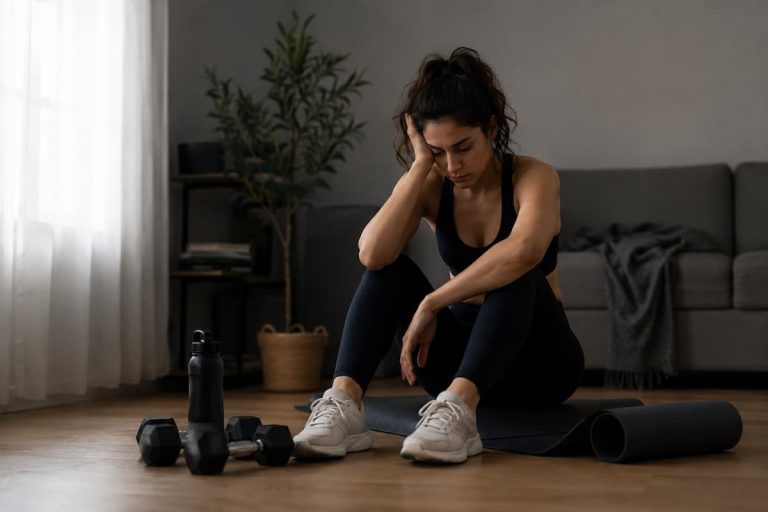
When people decide to improve their fitness, they often imagine long workout sessions, demanding exercise programs, or dramatic transformations that happen over a few intense weeks. The first few days usually begin with enthusiasm, but as work, family responsibilities, and unexpected interruptions return, those ambitious plans become increasingly difficult to maintain. Eventually, missing a few workouts can make it feel as though all progress has disappeared.
The reality is often much less dramatic. Fitness rarely changes because of one exceptional workout. Instead, it develops through dozens of ordinary sessions that may not seem particularly impressive at the time. A fifteen-minute workout completed consistently for months can contribute far more to long-term progress than occasional hours of exercise followed by long breaks.
This shift in perspective changes the entire experience of exercising at home. Rather than asking whether today’s workout was perfect, the more useful question becomes whether it was another step in a routine you can realistically continue. Over time, those small steps begin to create results that isolated bursts of motivation often cannot sustain.
Why We Expect Too Much From Individual Workouts
Many people finish a workout by asking themselves a familiar question: “Did I do enough today?” The answer is often based on how tired they feel, how much they sweated, or how difficult the exercises seemed. While these experiences can make a workout feel productive, they don’t always provide an accurate picture of long-term fitness.
It’s easy to overestimate the importance of one session because it’s the only one we can experience in the present moment. If today’s workout feels difficult, we assume meaningful progress must be happening immediately. If it feels easier than expected, we may wrongly conclude that it wasn’t worthwhile.
Fitness, however, usually develops through repeated exposure to movement over time. Individual sessions matter because they become part of a much larger pattern, not because each one transforms the body on its own. Looking at workouts this way reduces the pressure to make every session extraordinary and encourages a more sustainable approach.
Think in Months Instead of Days
Imagine placing two calendars side by side. One shows individual workout days, while the other represents several months of consistent activity. Looking only at today’s exercise can make progress seem slow because meaningful changes are rarely visible after a single session. Looking at months instead of days tells a very different story.
A person who completes four short workouts every week may finish more than two hundred sessions over the course of a year. None of those individual workouts needs to be perfect to contribute to the bigger picture. Together, they represent hundreds of opportunities to improve strength, movement, coordination, and confidence.
Thinking this way also changes how you respond to missed workouts. Missing one day becomes much less discouraging because it represents only a tiny part of a much longer journey. The focus shifts from protecting a perfect streak to maintaining a habit that continues growing over time.
Two Different Approaches to the Same Goal
Consider two people who both want to become more active at home.
The first person chooses one long workout each weekend. They enjoy exercising, but the session is demanding enough that they often need several days before feeling ready to exercise again. Busy weekends occasionally lead to missed workouts, making it difficult to establish a regular rhythm.
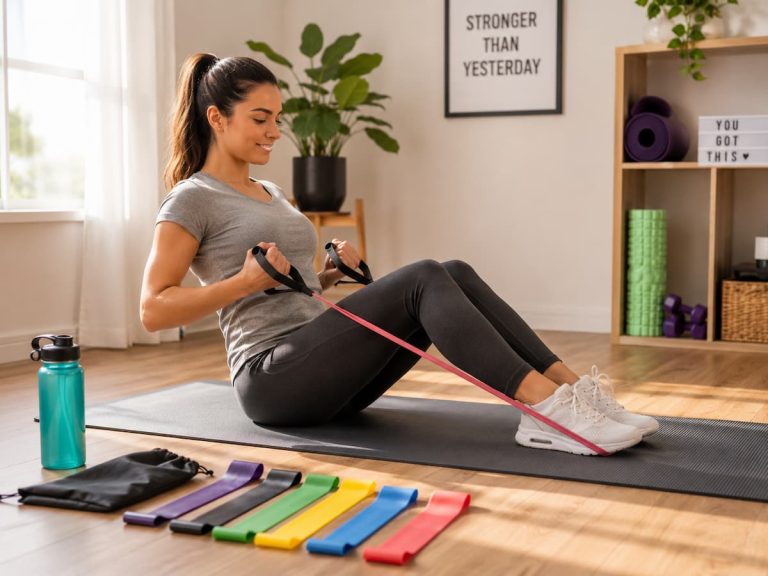
The second person takes a different approach. Instead of waiting for large blocks of free time, they complete shorter sessions throughout the week. Some workouts last fifteen minutes, while others are even shorter depending on the day’s schedule. Because the sessions feel manageable, it’s easier to fit them around work and household responsibilities.
Neither approach is automatically right or wrong. The important difference is sustainability. For many people, shorter sessions reduce the pressure of finding perfect conditions for exercise. They become another manageable part of the week instead of an event that requires careful planning every time.
Consistency Builds Confidence as Well as Fitness
Physical changes are often the first thing people hope to notice after beginning a home workout routine. While those changes may come gradually, another improvement often appears much earlier—confidence. Repeating simple exercises week after week makes movements feel more familiar, reducing uncertainty and helping workouts become less intimidating.
Confidence also grows because consistency creates evidence of progress. Every completed session reinforces the idea that regular movement is becoming part of everyday life. Rather than relying on motivation to begin exercising each time, people gradually begin trusting their routine instead.
This change is important because confidence influences future decisions. Someone who believes they can maintain a workout habit is usually more willing to continue even when progress feels slow. The routine no longer depends on excitement alone; it becomes supported by the knowledge that small efforts have already been repeated successfully many times.
Short Workouts Can Fit Real Life More Easily
One of the biggest advantages of shorter home workouts is flexibility. Most people don’t control every hour of their day. Meetings run late, family responsibilities change unexpectedly, and household tasks often take longer than planned. Waiting for a perfect hour to exercise can easily result in another missed workout.
Shorter sessions are often easier to adjust without abandoning them completely. If thirty minutes aren’t available, perhaps fifteen are. If the evening becomes busy, a brief workout in the morning or during a lunch break may still be possible. This flexibility helps maintain momentum because exercise adapts to life rather than competing with it.
Over time, this realistic approach encourages consistency. Instead of viewing exercise as something that only happens under ideal circumstances, it becomes a habit that fits into ordinary days with all their unpredictability.
Fitness Continues to Develop Between Workouts
It’s easy to think that progress only happens while you’re exercising. In reality, workouts are only one part of the process. What happens during the hours between sessions also influences how your body adapts to regular movement.
For example, if you complete a short workout but spend the rest of the day sitting without moving much, your overall activity level may still remain fairly low. On the other hand, someone who exercises briefly and also walks regularly, stretches occasionally, and stays generally active throughout the day is creating many more opportunities for movement.
Recovery also deserves attention. Muscles, joints, and energy levels all benefit from adequate rest between workouts. Giving your body time to recover doesn’t mean stopping all activity—it means finding a balance that allows you to continue exercising consistently without feeling exhausted after every session.
Nutrition and hydration play supporting roles as well. Everyday meals provide the energy needed for movement, while drinking enough fluids helps support normal body functions during active days. These habits may seem unrelated to home workouts at first, but together they create an environment where regular exercise becomes easier to maintain.
Progress Is Often Easier to Feel Than to Measure
Many people judge fitness almost entirely by the number on a scale. While body weight can be one measurement, it doesn’t always reflect the improvements happening in everyday life. Some of the most meaningful changes appear in situations that have nothing to do with weighing yourself.
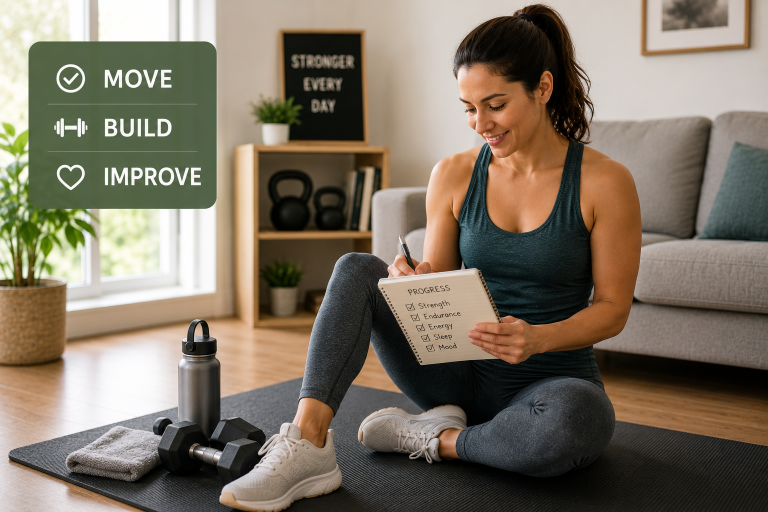
Walking upstairs without becoming as breathless, carrying shopping bags more comfortably, getting up from the floor with greater ease, or finishing household chores with less fatigue are all signs that regular movement may be making everyday activities feel easier. These improvements often arrive gradually, making them easy to overlook unless you occasionally reflect on how daily life feels compared with a few months earlier.
Another positive change is confidence in movement. Exercises that once required complete concentration may begin to feel familiar, allowing you to focus more on good technique and less on simply completing each repetition. This growing confidence encourages people to remain active because exercise becomes less intimidating over time.
A Better Way to Think About Home Fitness
Sometimes changing your perspective is just as important as changing your workout routine. Looking at fitness through a long-term lens can reduce unnecessary pressure and make consistency easier to maintain.
| Focusing Only On… | A More Helpful Perspective |
|---|---|
| One difficult workout | The total number of workouts completed over several months |
| Sweating as proof of success | Regular movement performed consistently |
| Daily changes in body weight | Improvements in strength, energy, and everyday movement |
| Never missing a workout | Returning to the routine after interruptions |
| Finding the perfect exercise plan | Building a routine that fits real life |
This way of thinking encourages progress without expecting every workout to produce immediate results.
Expectations That Often Make People Quit Too Soon
One common expectation is believing that visible changes should appear within a few weeks. When those changes don’t arrive as quickly as hoped, motivation often begins to fade. Yet many improvements happen internally or through better daily function long before dramatic physical changes become noticeable.
Another challenge is comparing your routine with someone else’s. Social media often highlights advanced workouts, impressive transformations, or long training sessions without showing the months or years of consistent effort behind them. Comparing your beginning with someone else’s established routine can make your own progress seem smaller than it really is.
It’s also worth remembering that consistency isn’t measured by perfection. Missing a workout because of illness, travel, or unexpected responsibilities doesn’t erase everything you’ve already accomplished. The habit becomes stronger when you learn to continue after interruptions rather than abandoning the routine altogether.
Conclusion
Building better fitness at home isn’t about finding the toughest workout or exercising for the longest amount of time. More often, it’s the result of choosing movement often enough that it becomes a natural part of everyday life. Short, manageable workouts remove many of the obstacles that prevent people from staying active, making consistency easier to achieve even during busy weeks.
Over time, these ordinary sessions begin to add up in meaningful ways. Strength develops through repetition, confidence grows with experience, and everyday activities gradually feel easier than they once did. Rather than chasing dramatic results from individual workouts, focus on building a routine that you can continue month after month. In the long run, the workouts you consistently complete are far more valuable than the impressive ones you only manage once in a while.