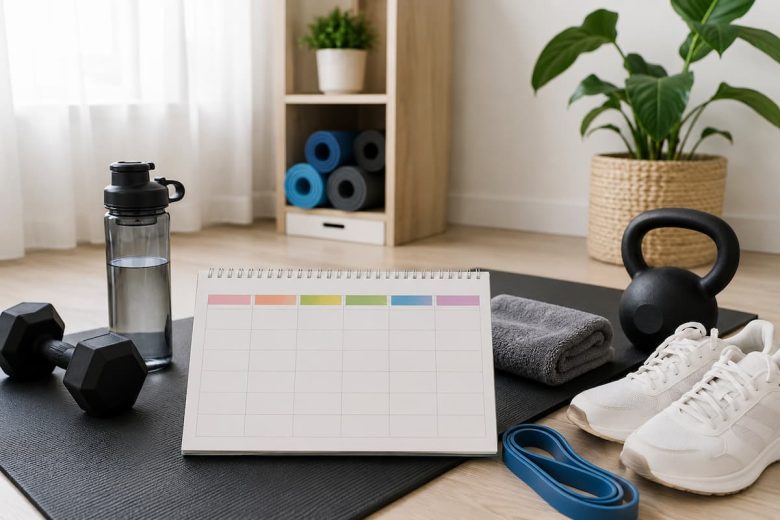
A few years back I would go for random runs when I felt motivated. Some weeks I exercised four times; other weeks I didn’t do anything. I believed the problem was discipline, but the underlying problem was no easy weekly home training schedule. Once I got into a good rhythm, things started to flow better and be more consistent. Having a weekly framework takes off the everyday choice fatigue and gives your brain focus on what needs to be done each day. You don’t think about “Should I work out today?” You just do it. This post is a realistic, beginner-friendly guide to constructing a balanced weekly training schedule for home that fits actual life. No pricey equipment, no need for a big room, no fitness background. All you need is a basic technique and a realistic schedule that you can repeat each week. This guide will help you establish a home fitness regimen that is sustainable, balanced, and easy to stick to long-term.
What Does “Balanced” in Fitness Really Mean?
For many people, the term “balanced workout plan” conjures up complex plans and rigid schedules. In reality, balance is about exercising different areas of your body and fitness throughout the week. An effective weekly home fitness routine combines strength training, cardio, mobility and rest days. All parts have a different purpose in your overall well-being. Strength training builds muscle and increases your metabolism; cardio helps your heart and endurance, and mobility work keeps your joints supple and prevents stiffness. Resting allows your body to recuperate and strengthen. If one of these is missing, then the progress slows down or the motivation falls. Working out is effective and fun when you have balance. It’s not about perfection; it’s about variation and consistency.” Once you learn these parts, putting together a weekly exercise routine will be much simpler and less daunting.
Pick Workout Days You Can Actually Stick To
The most critical part of designing a home fitness routine is determining how many days you can feasibly work out. Most novices come up with huge ideas like working out six days a week and quit after two weeks. Instead, start small and build up gradually. For most people, three to five days of workouts each week is optimal. Think about your lifestyle, work schedule and energy levels. Pick days that match your schedule instead of squeezing in a workout on a hectic day. For example, some people may work better in the morning while some people may prefer evening workouts. It’s not the intensity; it’s the constancy. After you decide on your training days, think of them as appointments you can’t miss. This simple commitment makes exercise a habit, not something we do sometimes.
How to Divide Your Week Into Workout Categories
After selecting your training days, the next step is designating a focus to each day. This reduces boredom and keeps the same muscles from being overworked. Below is an example of how to balance the weekly plan:
Sample weekly schedule
- Day 1: Full body strength workout
- Day 2: Cardio & Core
- Day 3: Rest or Movement
- Day 4: Lower body strength
- Day 5: Upper body strength
- Day 6: Easy activity or stretching
- Day 7: Relax
This arrangement allows you to attend to your whole body without overwhelming yourself. You can change the days according to your availability. The idea is to spread out your workouts so your body has time to heal. Variety also helps keep motivation levels high, as each day is different and entertaining.
Your At Home Strength Training Days
A well-rounded workout regime should include strength training at its core. A lot of people think you need gym equipment to get strong, yet bodyweight workouts can work really well. Focus on moves that target numerous muscle groups at once. These exercises are time-saving and give greater outcomes. If you’re a beginner, start with the simpler moves and work your way up to the more challenging ones.
Strength Exercises for the Essential Home
- Chair Squat or Squat
- Push-ups (wall or knee or full)
- Lunges or step-backs
- Hip bridges
- Resistance band rows Plank hold
A basic strength training can include 5-6 exercises done in 2-3 sets. Each set could be 10 to 15 reps, or 30 to 40 seconds. Strength exercise improves posture, stimulates metabolism, and increases energy levels throughout the day. As time progresses, you’ll see daily tasks becoming easier and your confidence increasing.
Adding Cardio (Without It Being Boring)
You don’t need to do hours of cardio or make it difficult to get good exercise. The aim is to boost your heart rate and develop endurance. Cardio at home may be enjoyable, flexible and creative. Choose activities you like so they don’t feel like a chore. You can combine various forms of cardio to keep things fresh.
Simple Home Cardio Workouts
- Walking briskly or marching in place
- Rope leaps (simulated or jump rope)
- Dancing to the beat
- Climbing stairs
- Cycling or jogging in the outdoors
Try to get 20-30 minutes of moderate cardio once or twice a week. For shorter sessions, you can perform 10-15-minute intervals. Regular cardio benefits your heart, mood, and vitality. It also increases strength training with better recovery and endurance.
Overlooked Power of Mobility and Stretching
Stretching is often skipped since it’s viewed as optional. In fact, mobility work is vital to avoid stiffness and injury. Working out, exercising at home can mean more sitting during the day, which tightens muscles and decreases flexibility. Mobility sessions added make your body move better and feel better.
Simple Mobility Exercises
- Neck and shoulder rolls
- Hip Rotations.
- Stretches for hamstrings
- Cat-Cow Stretch
- Gentle yoga flows
A 10- to 15-minute mobility session once or twice a week can make a HUGE difference. You’ll see better posture, less discomfort and greater workout performance. Mobility days can provide your mind a respite from hard workouts while still keeping the habit going.
Create Workouts That Fit Your Energy Levels
Not every day is the same, and your training schedule should reflect that. On some days you may feel full of energy. On other days you will feel exhausted or anxious. An ideal weekly plan will contain both high-energy and low-energy routines. This adaptability means you won’t burn out and you’ll keep your regimen reasonable. For instance, you can make strength days more rigorous and mobility days light and relaxed. This doesn’t mean missing workouts, but rather lowering the effort level when needed. This approach makes your plan sustainable and decreases the likelihood of leaving.
How to Design Easy 30-Minute Workout Templates
Many folks have trouble knowing what to do when it’s time to work out. Having templates ready to go makes it less confusing and saves time. This is what a normal 30-minute workout might entail:
30 Minute Workout Plan
- Warm-up (5 min): Marching, arm circles, gentle stretching
- Main workout (20 mins): strength or cardio exercises
- Cool Down (5 minutes): stretching and breath
This structure works for nearly any type of workout. Templates make workouts feel comfortable and easy to do again. After a while, this becomes a routine and requires less mental energy to get started.
Monitor Your Progress for Motivation
One of the most potent instruments for motivation is progress tracking. Once you start to notice results, you naturally want to keep going. Tracking doesn’t have to be difficult. A notebook, a calendar, or a simple fitness app would be fine. Write down your workouts, length of time, and how you feel afterwards. You will see trends and improvements over weeks and months. Perhaps push-ups are easier, workout times seem shorter, and energy levels increase. Such little triumphs boost confidence and reinforce the habit. It is a rewarding feeling to workout when you see your journey on paper.
Making Your Weekly Plan a Lifetime Habit
The last stage is to make your weekly fitness routine a lifestyle. It’s better to be consistent than perfect. Some weeks will be busier, and workouts may be shorter or lighter. That’s normal. The point is to keep turning up.” Your weekly plan is a guideline, not a set of hard and fast laws. Eventually, working out becomes part of your regular life. Exercise that feels natural, not forced, is way easier to stick with in the long run.
Summary
One of the best investments you can make in your health and well-being is to create a balanced weekly home fitness schedule. Add strength training, cardio, mobility and recovery, and you have a programme that supports your body and your lifestyle. Keep it simple, use simple templates and keep track of your progress to keep it easy and fun. The trick? Consistency and adaptability. But home workouts with the appropriate approach may be a sustainable habit that enhances energy, confidence and general quality of life.
FAQs
1. How many days a week should beginners train at home?
Beginners can aim for 3-4 days a week and grow if they want.
2. How To Build Muscle Without Equipment?
Yes. You can get strong with bodyweight workouts and resistance bands.
3. How long should a home workout be?
The average individual needs only 20 to 30 minutes of exercise in each session.
4. What if I miss a workout?
Just go on to the next scheduled workout. Over time, consistency is most important.
5. Is it bad to use the same fitness routine every week?
Yes. Do this plan for a number of weeks and vary the exercises as you get stronger.