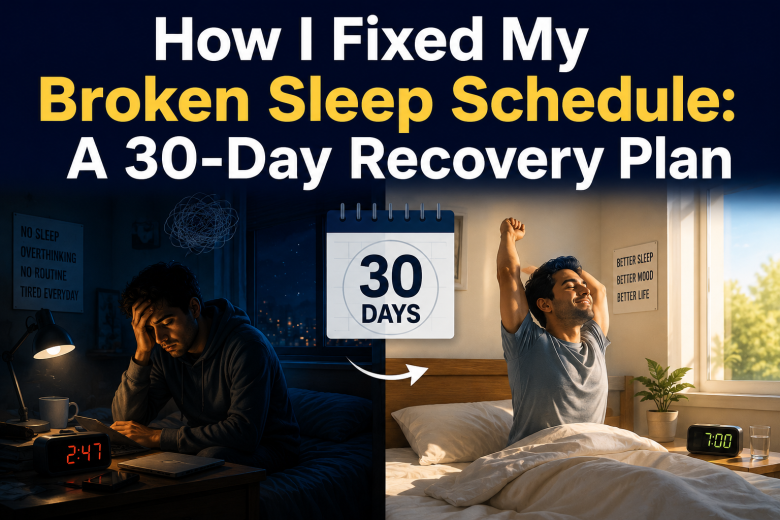
3 AM and Wide Awake: My Breaking Point
There was a Tuesday last winter when I finally admitted something had to change. I had been awake since two in the morning, scrolling through my phone in the dark, watching the ceiling fan spin. My alarm was set for six thirty. I had a meeting at nine. The math was brutal and familiar.
For months, my sleep schedule had been sliding backward. I would stay up until one or two, hit snooze four times, drag myself through the morning, and then crash for an hour after lunch. By evening I felt wired again. The cycle repeated. Coffee stopped helping. Melatonin stopped helping. Nothing worked because I was not treating the root problem. I was treating symptoms.
What I needed was not a quick fix. I needed a system. I needed thirty days of deliberate, structured change to reset my circadian rhythm and build habits that would stick. This article is exactly what I did, what worked, what failed, and how you can adapt it to your own situation. No gimmicks. No supplements to sell. Just a real plan from someone who was genuinely broken and genuinely fixed it.
Week One: The Honest Audit
Before changing anything, I spent seven days simply observing. I did not judge. I did not try to sleep earlier. I just recorded everything. What time did I actually get into bed? What time did I fall asleep? How many times did I wake up? What did I eat after six PM? When was my last coffee?
The data was embarrassing but necessary. I was averaging five hours and twenty minutes of actual sleep. My phone usage after ten PM was ninety minutes. I drank coffee until four in the afternoon. I ate dinner at nine thirty three nights that week. No wonder my body was confused.
This audit phase matters because you cannot fix what you do not measure. Most people guess at their habits. Guessing is usually wrong. Write it down. Use a notes app, a spreadsheet, or plain paper. The medium does not matter. The honesty does.
My Wake-Up Call: On day four of my audit, I realized I spent more time on my phone after midnight than I did in deep sleep. That single statistic made everything else click. The phone was not just a distraction. It was the primary driver of my broken schedule.
Week Two: Hard Stops and Soft Starts
Armed with data, I introduced two non-negotiable rules. No screens after 9:30 PM. No caffeine after noon. Everything else stayed the same. I wanted to see if these two changes alone would move the needle before adding complexity.
The first three nights were miserable. I felt bored without my phone. I lay in bed staring at the wall. My brain felt itchy, like it was missing a stimulation fix. This is the withdrawal phase, and it is real. Your brain has adapted to constant input. Removing it feels wrong before it feels right.
By night five, something shifted. I felt tired earlier. Not exhausted, but genuinely sleepy. I got into bed at ten fifteen and fell asleep before eleven. That had not happened in over a year. The caffeine cutoff was also making a difference. By two PM, I noticed my afternoon energy crash was softer. I no longer needed coffee to recover from coffee.
| Rule | Why It Works | The Hardest Part |
|---|---|---|
| No screens after 9:30 PM | Blue light suppresses melatonin production for up to two hours | Replacing the evening dopamine hit with something slower |
| No caffeine after noon | Caffeine half-life is five to six hours, affecting sleep quality long after the buzz fades | The afternoon slump that hits around three PM |
| Fixed wake-up time daily | Anchors your circadian rhythm regardless of when you fell asleep | Weekend mornings when your body begs for extra hours |
I also added a fixed wake-up time. Six thirty every day, including weekends. This was the hardest rule of all. Saturday morning felt like punishment. But consistency is what trains your body. Sleeping in on weekends undoes five days of progress. The research on this is clear, and my experience confirmed it.
Week Three: Building the Wind-Down Routine
By week three, the basic rules were holding. I needed something to fill the void left by my phone. Simply removing a bad habit is not enough. You need to replace it with something better, or the old habit creeps back.
I built a thirty-minute wind-down routine. At nine PM, I started dimming lights around the house. At nine fifteen, I made herbal tea. At nine thirty, I read a physical book in bed. Not a thriller. Not work material. Something calm and slightly boring. A history book about medieval agriculture worked perfectly.
The routine became a signal. My body learned that dim lights and tea meant sleep was coming. This is classical conditioning, and it works on adults just as well as it works on children. The key is repetition and patience. One night does not build a signal. Ten nights do.
What Actually Worked: The book was crucial. Physical pages, no backlight, no notifications. I tried an e-reader first, but even the dimmest screen kept my brain alert. Paper was the difference between lying awake for forty minutes and falling asleep in fifteen.
I also experimented with temperature. My bedroom was always warm because I hated being cold. Research suggests cooler rooms promote better sleep, so I lowered the thermostat to sixty-five degrees and added a heavier blanket. The first night felt strange. By the third night, I was sleeping deeper and waking up less. Sometimes the fix is environmental, not behavioral.
Week Four: Troubleshooting the Edge Cases
Not every night went smoothly. Life happens. Deadlines loom. Friends visit. Stress spikes. Week four was about handling the exceptions without derailing the entire system.
I had one night where I absolutely needed to work late. A project deadline could not move. Instead of abandoning all rules, I compromised. I used blue light-blocking glasses after nine. I kept my wake-up time the next morning but allowed a twenty-minute nap after lunch. One rough night did not become a rough week because I had a damage control plan.
Social events were another challenge. Dinner with friends often ran past my ideal bedtime. I started suggesting earlier meetups or breakfast instead of dinner. Most people were flexible. The ones who were not became weekend-only friends, which was honestly a good filter for my priorities.
Reality Check: You will not be perfect. I had four bad nights during my thirty days. Two were work-related, one was emotional stress, and one was just random insomnia. The goal is not perfection. The goal is a trend that moves in the right direction. My bad nights became shorter and less frequent as the weeks passed.
The Results After Thirty Days
By day thirty, my average sleep time had climbed from five hours and twenty minutes to seven hours and ten minutes. My sleep onset time, the minutes it took to fall asleep, dropped from forty-five to under fifteen. I woke up before my alarm about half the time, something that never happened before.
More importantly, the quality changed. I felt rested in the morning, not just conscious. My afternoon energy was steady. I stopped craving sugar at three PM. My mood improved noticeably enough that coworkers commented on it. Sleep is the foundation everything else builds on, and I finally understood what that meant in practice.
The schedule was not rigid anymore. It had become automatic. I did not need willpower to put my phone down at nine thirty. I wanted to. The habit had formed, and maintaining it felt easier than breaking it.
What I Would Do Differently
Looking back, I would start the temperature change in week one, not week three. It made a bigger difference than I expected, and delaying it cost me some early progress. I would also tell more people about my plan. Accountability helps, and I kept it private for too long.
I would not change the gradual approach, though. Some people try to fix everything at once and burn out by day five. My slow, additive method let each change settle before adding the next. It felt sustainable because it was sustainable.
Your Turn: Adapt This Plan to Your Life
My schedule might not match yours. Maybe you work night shifts. Maybe you have young children who wake you up. Maybe you live in a studio apartment where light and temperature are harder to control. The principles still apply, even if the specifics need adjusting.
Start with the audit. Know your numbers. Then pick one change that feels achievable. Do not try to be a silent monk overnight. Build one habit, let it stick, then add another. In thirty days, you will not just fix your sleep. You will understand yourself better than you did before. Sleep is not a luxury. It is maintenance. Treat it like brushing your teeth or paying your bills. Non-negotiable, routine, and absolutely worth the effort.
Sources and References
- Walker, M. (2017). Why We Sleep: Unlocking the Power of Sleep and Dreams. Scribner.
- National Sleep Foundation. (2024). Sleep Hygiene Recommendations. Retrieved from https://www.thensf.org/sleep-health-topics/sleep-hygiene/
- Harvard Medical School. (2023). Blue Light Has a Dark Side. Retrieved from https://www.health.harvard.edu/staying-healthy/blue-light-has-a-dark-side
- Cleveland Clinic. (2024). Caffeine: How Long It Lasts and How to Cut Back. Retrieved from https://my.clevelandclinic.org/health/articles/caffeine-how-to-cut-back
- American Academy of Sleep Medicine. (2023). Circadian Rhythm and Sleep. Retrieved from https://aasm.org/circadian-rhythm/
- Journal of Clinical Sleep Medicine. (2022). The Impact of Bedroom Temperature on Sleep Quality. Retrieved from https://jcsm.aasm.org/