Most people don’t stop tracking their health because they lose interest in feeling better. They stop because the system they chose asks for too much, too soon. What begins as a simple goal often turns into logging dozens of numbers every day, checking multiple apps, and worrying about missing a single entry. Within a few weeks, the routine starts feeling like another responsibility instead of a tool for improving everyday life.
A sustainable health tracking routine should work quietly in the background. It should help you notice meaningful changes, support better decisions, and fit naturally into your daily schedule without demanding constant attention. Whether your goal is improving sleep, staying active, eating more consistently, or simply understanding your body’s patterns, the tracking method should remain simple enough to continue for months rather than days.
This guide focuses on building a practical health tracking routine that grows with you over time. Instead of collecting endless data, you’ll learn how to create a system that highlights useful patterns, encourages realistic improvements, and remains manageable even during busy periods.
Why Most Health Tracking Routines Quietly Fall Apart
Many health tracking routines begin with enthusiasm but gradually become difficult to maintain because they ask people to monitor everything at once. Weight, water intake, calories, exercise, sleep, mood, heart rate, daily steps, and countless other measurements may all seem important. While each piece of information has value, trying to manage them together often creates unnecessary complexity that discourages consistency.
Another common challenge is expecting immediate results from daily records. Health changes usually develop gradually, yet people often look for noticeable improvements after only a few days. When progress feels slower than expected, the tracking routine begins to feel pointless, even though meaningful patterns usually become visible only after several weeks of consistent observation.
There is also the tendency to treat every missed entry as a failure. Missing one day should not erase the value of previous weeks, but many people abandon their entire system because they believe it is no longer complete. A lasting routine accepts that life includes travel, illness, unexpected work, and changing schedules. Flexibility keeps the habit alive far better than perfection.
Build Your Routine Around One Clear Purpose
Before recording any information, decide why you want to track your health in the first place. Without a clear purpose, it becomes easy to collect data that never influences your decisions. Someone interested in improving energy levels does not necessarily need the same tracking routine as someone focusing on exercise consistency or sleep quality.
A simple purpose helps determine which observations deserve your attention. For example, if your main objective is feeling more energetic throughout the day, your routine may include sleep duration, daily movement, hydration, and afternoon energy levels. Recording dozens of unrelated measurements would only create unnecessary work without providing additional insight.
Rather than asking, “What should I track?” begin by asking, “What do I hope to understand?” That single question often removes half the information people originally planned to record and makes the entire routine much easier to maintain.
Start Small Before Expanding Your Tracking System
One of the biggest misconceptions about health tracking is that a complete system must be created from the first day. In reality, beginning with only a few meaningful observations usually leads to better long-term consistency than trying to build a detailed health journal immediately.
During the first couple of weeks, focus on recording only the information that directly supports your main goal. Once this routine becomes automatic, additional categories can be introduced gradually if they genuinely provide useful insights. Expanding slowly allows the system to grow naturally instead of becoming overwhelming.
The following table shows how a tracking routine can develop over time without becoming difficult to manage.
| Time Period | Main Focus | Daily Time Needed |
|---|---|---|
| Week 1 | Sleep, movement, water intake | 2–3 minutes |
| Week 2 | Add energy level and mood | 3–4 minutes |
| Week 3 | Include exercise consistency | 4–5 minutes |
| Week 4 | Add short personal notes | Around 5 minutes |
By introducing new observations gradually, your routine remains practical while becoming increasingly useful over time.
The Four-Week Foundation That Builds Long-Term Consistency
Instead of trying to create a perfect tracking system immediately, think of your first month as a learning period. The goal is not to collect impressive amounts of information but to discover which habits are worth monitoring and which records you rarely use. This approach reduces pressure while helping you create a routine based on your actual lifestyle rather than an idealized version of it.
Week One: Observe Without Trying to Change Everything
During the first week, avoid making major lifestyle changes. Simply pay attention to your existing habits and record a few basic observations each day. This creates an honest starting point that future improvements can be compared against. If you immediately change everything at once, it becomes difficult to identify which adjustments actually made a difference.
Simple observations such as daily movement, approximate sleep duration, and general energy levels are often enough to establish a useful baseline. Resist the urge to analyze every number. At this stage, consistency is far more important than accuracy because your primary objective is building the habit itself.
Week Two: Begin Looking for Patterns
Once several days of information have been recorded, start reviewing your entries instead of simply adding new ones. You may notice that your energy is consistently lower after certain routines or that your activity naturally increases on particular days of the week. These small observations become the foundation for future improvements.
Avoid making multiple changes based on a single observation. Health routines become more reliable when adjustments are introduced gradually and evaluated over time rather than reacting to every individual day. Small, consistent improvements are much easier to sustain than dramatic lifestyle changes made all at once.
Keep Your Daily Record Simple Enough to Complete Anywhere
A practical health tracking routine should work whether you’re at home, travelling, or following a busy schedule. If recording your information requires multiple devices or a lengthy process, there is a good chance the habit will eventually disappear. Simplicity should always take priority over collecting every possible detail.
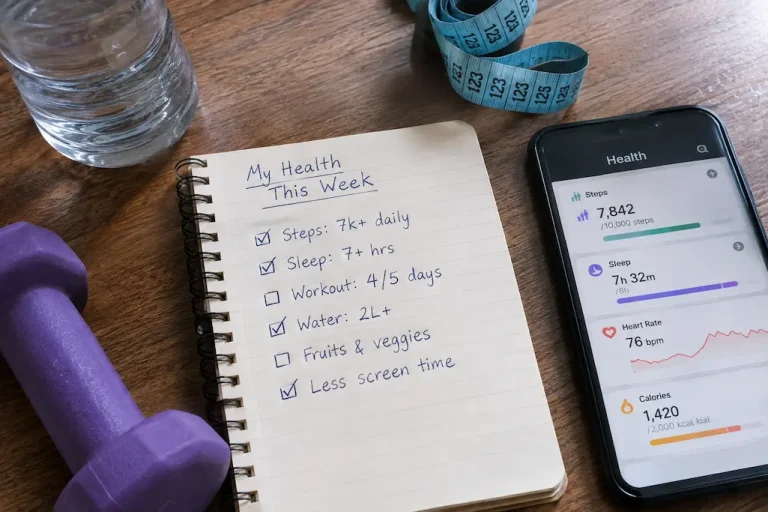
Many people find that a single notebook, spreadsheet, or notes application provides everything they need. Recording just a few meaningful observations every evening usually takes less than five minutes while still producing valuable information over several weeks. What matters most is returning to the same system consistently rather than searching for the perfect tracking method.
A simple format also makes reviewing your progress much easier. Instead of scrolling through complicated reports or comparing dozens of charts, you can quickly identify changes in your daily routine and recognize patterns that deserve attention. Over time, those brief records become a practical guide for making informed lifestyle decisions rather than a collection of forgotten numbers.
Review Your Records to Learn, Not to Judge Yourself
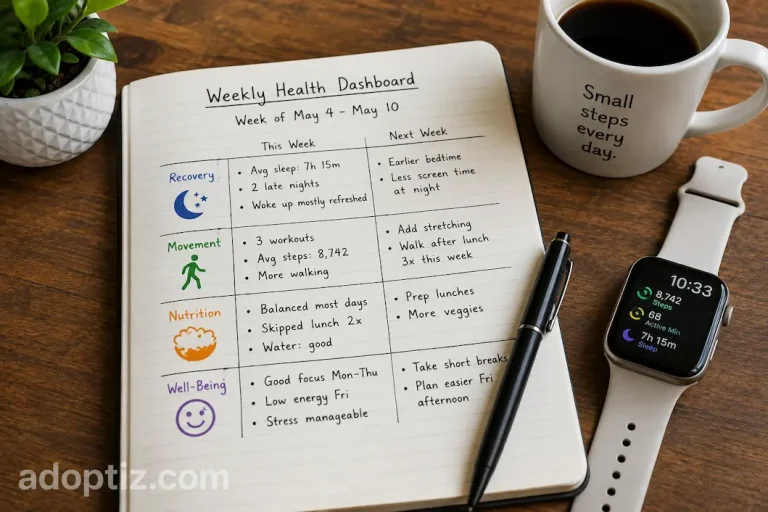
One of the most overlooked parts of a health tracking routine is the review process. Recording information is only the first step; the real value comes from understanding what those records are telling you. Instead of checking your notes every day looking for immediate improvements, set aside a few minutes at the end of each week to look for broader patterns. This simple habit transforms your tracker from a collection of numbers into a practical decision-making tool.
When reviewing your records, avoid asking whether every day was perfect. A much better question is whether your overall routine is moving in the right direction. Perhaps your average bedtime has become more consistent, or maybe you’ve been taking fewer long breaks from physical activity. These gradual improvements often matter more than isolated highs and lows because they reflect habits that are becoming part of your everyday lifestyle.
Remember that health is rarely linear. Some weeks will naturally include travel, work deadlines, family commitments, or unexpected changes that affect your routine. Looking at your records with curiosity instead of criticism helps you identify realistic adjustments rather than creating unnecessary pressure to achieve perfect results every day.
Signs Your Health Tracking Routine Is Actually Working
Many people expect their tracking routine to produce dramatic changes within a short period, but lasting health improvements are usually much quieter. A successful routine doesn’t just generate data—it helps you make better everyday decisions without requiring constant effort. The biggest sign of progress is often increased awareness rather than immediate physical changes.
As your routine becomes established, you’ll probably begin recognizing situations that influence your health before they become bigger problems. You may notice that poor sleep is followed by lower energy, or that skipping regular meals affects your afternoon concentration. These observations make it easier to respond early instead of waiting until unhealthy patterns become difficult to change.
A practical tracking system often shows its value through small improvements that build over time, such as:
- Feeling more aware of your daily habits.
- Making healthier choices without relying on reminders.
- Recognizing recurring patterns more quickly.
- Planning your weeks with greater confidence.
- Feeling less overwhelmed by health information.
These changes may appear modest, but together they create a routine that supports long-term well-being instead of short-term motivation.
Adjust Your Routine Without Starting Over
As your lifestyle changes, your tracking routine should change with it. A system that worked perfectly a year ago may no longer reflect your current schedule, responsibilities, or personal goals. Making thoughtful adjustments helps your routine stay useful while preserving the consistency you’ve already built.
For example, someone who begins working from home might decide to monitor sitting time more closely, while another person starting a regular exercise program may place greater emphasis on recovery and sleep. These adjustments should always support your current priorities rather than adding unnecessary complexity. Expanding your tracker simply because more information is available usually makes it harder to maintain.
At the same time, avoid making several changes at once. If you introduce new measurements every week, it becomes difficult to determine which information is actually helping you. A gradual approach allows your routine to evolve naturally while remaining familiar enough to continue without extra effort.
Common Habits That Reduce the Value of Health Tracking
Even a well-designed tracking system can lose its usefulness if certain habits become part of the routine. Most of these problems develop gradually and often go unnoticed until the process begins feeling frustrating or time-consuming.
| Habit | Why It Creates Problems | Better Alternative |
|---|---|---|
| Tracking too many things | Makes the routine difficult to maintain | Focus only on information that supports your current goals |
| Reviewing data every few hours | Encourages unnecessary worry over normal daily changes | Review weekly instead of constantly |
| Comparing yourself with others | Shifts attention away from personal progress | Compare today’s habits with your own previous records |
| Frequently changing tracking methods | Creates inconsistent records that are difficult to review | Keep one simple system and improve it gradually |
| Expecting perfect consistency | Makes occasional missed days feel like failure | Continue after interruptions without restarting everything |
Avoiding these habits doesn’t require extra effort. In most cases, it simply means keeping your routine focused on learning rather than achieving perfect records.
Build a Routine That Fits Real Life
Health tracking should support your everyday lifestyle instead of competing with it. If your routine only works during quiet weeks with plenty of free time, it is unlikely to last when life becomes busy. A practical system should remain useful during holidays, work deadlines, travel, and other periods when maintaining ideal habits becomes more challenging.
This is why flexibility is one of the most valuable features of any tracking routine. Missing a day should never feel like starting over, and temporary changes should be viewed as normal rather than discouraging. Long-term success depends far more on returning to your routine consistently than on maintaining uninterrupted streaks.
Think of your tracker as a personal reference rather than a scorecard. It exists to help you understand your habits, recognize meaningful patterns, and make informed decisions over time. When approached this way, tracking becomes less about collecting data and more about building awareness that naturally supports healthier choices.
Frequently Asked Questions
How many health habits should I track at one time?
Start with three or four areas that are most relevant to your current goals. Once tracking those becomes part of your routine, you can gradually include additional observations if they provide meaningful insights.
Is it better to use a notebook or a mobile app?
Either option can work well. The best choice is the one you are most likely to use consistently. A simple notebook is often just as effective as a digital application if it encourages regular reviews.
How often should I review my health records?
A brief weekly review is usually enough to identify useful patterns. A more detailed monthly review can help you evaluate long-term progress and decide whether your routine needs any adjustments.
What should I do if my routine becomes difficult to maintain?
Reduce the amount of information you record instead of abandoning the system completely. Simplifying your routine often restores consistency while preserving the valuable habit you’ve already developed.
Conclusion
Building a personal health tracking routine isn’t about recording every possible detail or chasing perfect daily results. The most effective system is one that fits naturally into your life, highlights meaningful patterns, and encourages small improvements that can be maintained over time. When the routine remains simple, reviewing your progress becomes informative instead of overwhelming.
By starting with a clear purpose, adding new observations gradually, and reviewing your records with curiosity rather than judgment, you create a system that continues supporting your goals through changing schedules and different stages of life. Over weeks and months, those small daily entries become much more than a collection of notes—they become a reliable guide for understanding your habits and making practical decisions that contribute to long-term health and well-being.