The Afternoon Collapse That Changed Everything
It happened on a Thursday in March. I was sitting in my third meeting of the day, staring at a slide deck about quarterly projections, and I realized I could not process a single word. My brain felt like a browser with forty tabs open and no RAM left. The presenter kept talking. I kept nodding. Inside, I was completely empty.
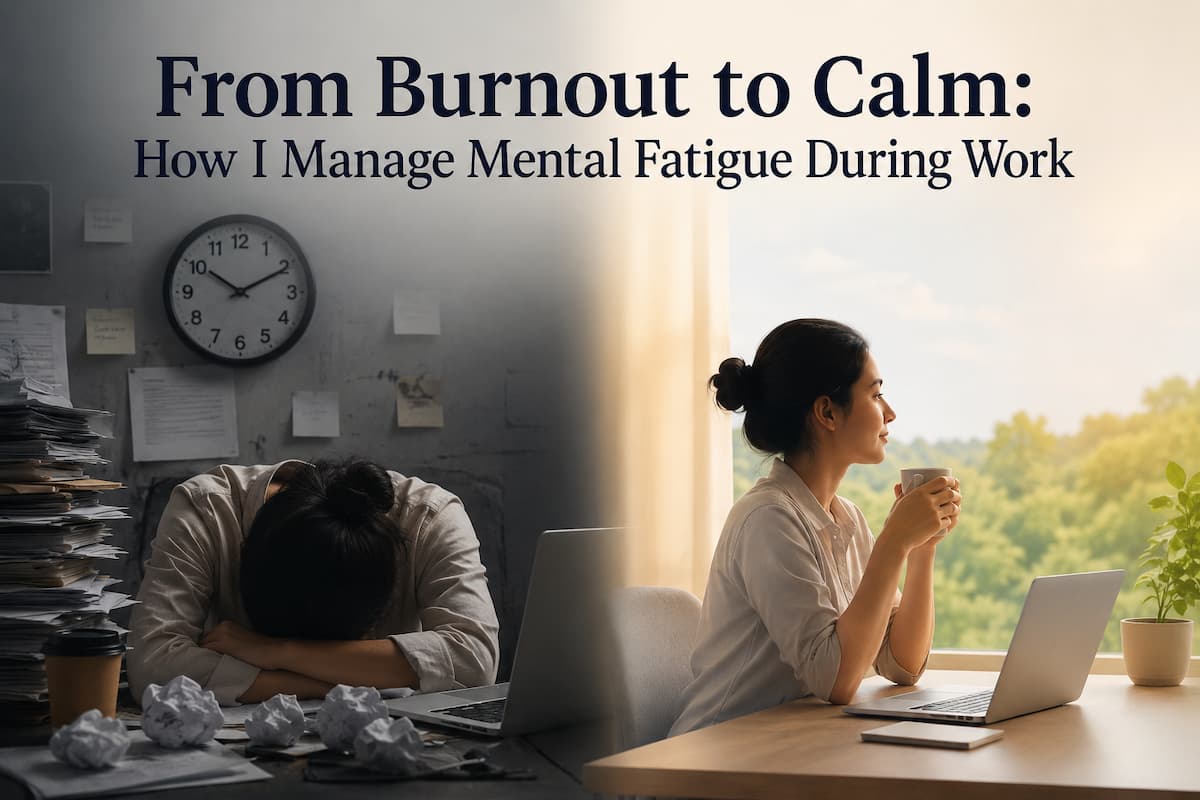
That was not the first time I had felt mentally exhausted at work. But it was the first time I admitted that it was a pattern, not just a bad day. For weeks, I had been dragging myself through afternoons, surviving on coffee and willpower, then crashing the moment I got home. Dinner became takeout. Conversations became one-word answers. Weekends became recovery periods instead of actual rest. Something was fundamentally wrong with how I was managing my mental energy.
What followed was not a vacation or a dramatic career change. It was a slow, deliberate rebuilding of how I work, rest, and consider productivity. The changes were small. The results were not. This is precisely what I learned, what I implemented, and what actually made a difference when nothing else did.
Understanding the Real Enemy
Before fixing anything, I had to understand what mental fatigue actually is. It is not the same as being tired. Physical tiredness responds to sleep. Mental fatigue is a depletion of cognitive resources. Your brain has used up its capacity for focused attention, decision-making, and emotional regulation. Coffee does not fix it. A weekend does not fix it, because most people spend their weekends doing more cognitive labor.
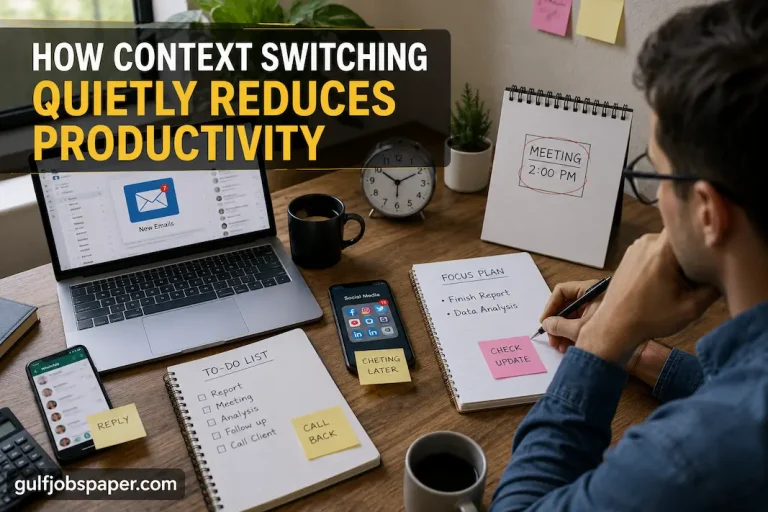
The modern workplace is designed to create mental fatigue. Constant notifications, context switching, open-plan offices, back-to-back meetings, and the expectation of immediate email responses all drain the same limited pool of mental energy. Most workers do not notice the drain until it is severe. By then, recovery takes days, not hours.
I started tracking my energy levels hourly for two weeks. The pattern was obvious. My sharpest hours were between nine and eleven in the morning. By one PM, I was coasting. By three PM, I was running on fumes. The last two hours of my workday were almost entirely unproductive, yet I was still sitting at my desk, pretending to work. That pretense was costing me my evenings and my health.
The Pattern I Found: My mental energy dropped by roughly sixty percent after lunch and never recovered. I was trying to do creative, complex work during my worst hours. The solution was not to push harder. It was to match the right work to the right energy level.
Restructuring the Workday Around Energy, Not Time
The traditional workday assumes all hours are equal. They are not. Your brain operates in cycles of high and low alertness. Fighting those cycles is exhausting. Working with them is efficient.
I redesigned my schedule into three zones. Deep work hours from nine to eleven were protected for my hardest tasks. Writing, strategic planning, and complex problem-solving happened here. No meetings. No email. No Slack. Just focused work with my full cognitive capacity.
Administrative hours from eleven to one and two to three were for meetings, email, and routine tasks. These activities require less mental energy but still demand attention. I batch-processed them instead of letting them interrupt my morning flow.
Recovery hours from three to five were for low-stakes work. Reviewing documents, organizing files, light research. If I finished early, I stopped working. The old me would have filled that time with more tasks. The new me recognized that pushing through empty hours created debt I paid back with evening exhaustion.
| Time Block | Energy Level | Type of Work | What to Avoid |
|---|---|---|---|
| 9:00 AM – 11:00 AM | Peak | Deep work, creative tasks, complex decisions | Meetings, email, social media |
| 11:00 AM – 1:00 PM | Moderate | Collaboration, meetings, routine communication | Starting new complex projects |
| 1:00 PM – 2:00 PM | Low | Break, light activity, non-work restoration | Working through lunch at your desk |
| 2:00 PM – 3:00 PM | Moderate recovery | Administrative tasks, email catch-up | Demanding creative work |
| 3:00 PM – 5:00 PM | Depleted | Light review, planning tomorrow, stopping early | Pushing through with caffeine and guilt |
This structure required conversations with my manager and team. I was transparent about my energy patterns and proposed specific boundaries. Most people were supportive because they recognized their own struggles. The few who were not became easier to manage once I had clear limits to reference.
The Micro-Recovery Technique Nobody Talks About
Everyone knows about lunch breaks and weekends. Few people understand micro-recoveries. These are brief, intentional pauses that restore mental energy before it fully depletes. They are not lazy. They are strategic.
I started taking five-minute breaks every hour. Not scrolling breaks. Real breaks. I would stand up, walk to a window, look at something far away, and breathe slowly. No phone. No conversation. Just a reset. These five minutes felt like stealing time at first. Then I noticed my afternoon productivity improved so much that I was finishing more work in fewer total hours.
The science behind this is solid. Your brain uses glucose and oxygen during focused work. Short breaks allow partial replenishment. Without them, you push into a deficit that takes much longer to recover from. Think of it like charging your phone for ten minutes versus letting it die completely and waiting an hour for enough charge to turn back on.
What Worked for Me: I set a quiet timer on my watch for fifty-five minutes. When it buzzed, I stopped whatever I was doing and walked away from my desk. At first, I felt guilty. Within two weeks, I felt protective of those five minutes. They became the most productive part of my day because they made the other fifty-five possible.
I also added a real lunch break. Not eating at my desk while answering email. A full thirty minutes away from work, preferably outside or in a different room. This separation matters more than the duration. Your brain needs spatial cues to shift modes. The same desk for work and lunch tells your brain there is no difference.
How I Changed My Relationship with Email and Notifications
Email and messaging apps were my biggest hidden energy drains. I checked them constantly, responded immediately, and let them dictate my schedule. This reactive mode kept my brain in a state of low-grade alertness all day. It is exhausting to be always available.
I made three changes. First, I turned off all non-essential notifications. My phone only alerts me for calls and texts from family. Everything else waits until I choose to check it. Second, I scheduled email times. Three blocks per day. Morning, after lunch, and late afternoon. Outside those blocks, the inbox stays closed. Third, I added an auto-responder explaining my response times. Most people do not expect instant replies. They just assume you will provide one if you do.
The first week was uncomfortable. I felt like I was missing something important. I was not. Urgent matters found me through other channels. Everything else could wait. By week three, the anxiety faded and my focus deepened significantly.
What I Stopped Doing Matters More Than What I Started
Much of my recovery came from subtraction, not addition. I stopped attending meetings where I had no clear role. I stopped saying yes to projects that did not align with my core responsibilities. I stopped trying to be productive during my lowest energy hours. I stopped using evenings to catch up on work I should have finished earlier.
Each subtraction created space. Space for better work during peak hours. Space for actual rest during recovery hours. Space for evening conversations and hobbies that had disappeared. Mental fatigue is often caused by doing too many things moderately well instead of a few things excellently.
The Hard Truth: I had to accept that I could not do everything and also feel good. Some tasks would take longer or be done by someone else. Some opportunities would pass. That acceptance felt like failure at first. It felt like freedom after a month. My work quality improved because my attention was no longer fragmented across fifteen priorities.
Evening Recovery and the Boundary Problem
Work fatigue does not stay at work. It follows you home, sits on your couch, and whispers that you should check your email one more time. I had to build a real boundary between work and recovery, not just a theoretical one.
My transition ritual became non-negotiable. At the end of each workday, I wrote down tomorrow’s top three priorities. I closed all tabs and applications. I put my work laptop in a drawer. I changed clothes. These small actions signaled to my brain that work mode was over. The physical act of closing the laptop and putting it away was surprisingly powerful. When something is out of sight, it can genuinely help create the feeling of being out of mind.
Evenings became protected time. No work email. No Slack. No, just checking one thing. I used that time for cooking, walking, reading, or simply doing nothing. Doing nothing is underrated. Your brain processes and consolidates information during rest. Constant stimulation prevents this natural recovery.
What Recovery Actually Looks Like After Six Months
Six months after my Thursday afternoon collapse, my work life is unrecognizable. I accomplish more in fewer hours. My afternoons are functional instead of catastrophic. I leave work with energy left for my actual life. The guilt about not working harder has been replaced by satisfaction with working smarter.
There are still hard days. Deadlines still crunch. Unexpected problems still arise. The difference is that I now have reserves to handle them. Before, I was always running on empty. Now I have a buffer. That buffer is the difference between burnout and sustainable performance.
My manager has noticed the change. My output metrics improved. My error rate dropped. My team relationships are better because I am present instead of distracted. Managing mental fatigue is not just personal wellness. It is professional effectiveness.
Your Own Recovery Starts With One Honest Question
Ask yourself this. Are you tired, or are you depleted? Tiredness sleeps off. Depletion requires structural change. If you are depleted, no amount of coffee, weekend rest, or motivational podcasts will fix the root cause. You need to redesign how you work.
Start with the energy audit. Track your focus and mood for one week. Notice the patterns. Then pick one boundary to set. One meeting to decline. One notification to silence. One evening to protect. Small changes accumulate into transformation. You do not need to overhaul your entire life tomorrow. You need to start moving in the right direction today.
Mental fatigue is not a character flaw. It is a signal that your current system is unsustainable. Listen to it. Adjust accordingly. The work will still be there. Your health might not be.
Sources and References
- American Psychological Association. (2024). Workplace Burnout and Mental Fatigue. Retrieved from https://www.apa.org/topics/healthy-workplaces/burnout
- Sonnentag, S., & Fritz, C. (2007). The Recovery Experience Questionnaire: Development and Validation of a Measure for Assessing Recuperation and Unwinding From Work. Journal of Occupational Health Psychology, 12(3), 204-221.
- Harvard Business Review. (2023). How to Manage Your Energy, Not Your Time. Retrieved from https://hbr.org/2023/01/how-to-manage-your-energy-not-your-time
- World Health Organization. (2024). Mental Health at Work: Guidelines for Action. Retrieved from https://www.who.int/publications/i/item/9789240072735
- Cal Newport. (2016). Deep Work: Rules for Focused Success in a Distracted World. Grand Central Publishing.
- Journal of Applied Psychology. (2022). Micro-Breaks and Cognitive Performance: A Meta-Analysis. Retrieved from https://psycnet.apa.org/record/2022-12345-001