You’ve been putting in the effort—following home workout videos, setting aside time, and trying to stay consistent. Yet, despite your efforts, the results don’t seem to match your expectations.
This situation is more common than you think.
Many beginners assume that if they’re working out regularly, results should automatically follow. But in reality, progress depends on how you approach your routine, not just how often you exercise.
The gap between effort and results usually comes down to small but important mistakes. These mistakes are easy to overlook, but they can significantly slow down your progress.
The good news is that once you identify these issues, you can fix them with simple adjustments—without needing complex routines or expensive equipment.
If you’re just starting, it may help to revisit Complete Guide to Home Fitness for Beginners to ensure your foundation is solid.
What “Results” Really Mean in Home Workouts
Before diving into problems, it’s important to understand what results actually look like.
Many people expect quick, visible changes. But progress often shows up in less obvious ways first.
Real results include:
- Improved consistency
- Better energy during the day
- Increased strength or endurance
- Better control over your routine
If you only focus on visible changes, you may miss these early signs of improvement.
Understanding this helps you stay motivated and realistic.
Problem 1: Inconsistent Workout Routine
Why It Slows Your Progress
Inconsistency is one of the biggest reasons home workouts fail to deliver results.
Doing workouts randomly—some days active, other days completely inactive—prevents your body from adapting and improving.
How to Fix It
Consistency matters more than intensity.
Instead of aiming for long or difficult sessions, focus on:
- 3 to 4 sessions per week
- Fixed workout days
- Manageable session durations
Building consistency is a habit, not a one-time decision. To strengthen this habit, you can follow How to Stay Consistent with Healthy Habits Long-Term.
Problem 2: Repeating the Same Exercises Without Change
Why It Slows Your Progress
Your body adapts quickly. If you repeat the same exercises at the same intensity, your body stops being challenged.
This leads to slower or no visible improvement.
How to Fix It
You don’t need a completely new routine—just small changes.
Try:
- Increasing repetitions gradually
- Slowing down movements
- Adding slight variations
Even minor adjustments can make your routine more effective over time.
Problem 3: Poor Exercise Form
Why It Slows Your Progress
Without proper form, exercises become less effective and harder to control.
At home, it’s easy to rush through movements or ignore posture, which reduces results.
How to Fix It
Focus on quality instead of quantity:
- Perform movements slowly
- Maintain proper posture
- Control each repetition
Fewer correct repetitions are more effective than many rushed ones.
Problem 4: No Progression in Your Routine
Why It Slows Your Progress
Doing the same level of effort repeatedly doesn’t challenge your body enough to improve.
Without progression, your routine becomes maintenance rather than growth.
How to Fix It
Progression can be simple:
- Add 2–3 more repetitions over time
- Increase workout duration slightly
- Reduce rest time between sets
These small changes create steady improvement without overwhelming you.
Problem 5: Ignoring Daily Movement
Why It Slows Your Progress
A short workout cannot compensate for an otherwise inactive day.
If you spend most of your time sitting or inactive, your overall progress slows down.
How to Fix It
Stay active throughout the day:
- Take short movement breaks
- Walk around regularly
- Avoid long periods of inactivity
Simple daily movement adds up. You can explore practical ideas in How to Stay Active at Home Without Equipment.
Problem 6: Lack of Routine Structure
Why It Slows Your Progress
Random exercises without structure often lead to uneven effort and inconsistent results.
Without a plan, it’s difficult to track improvement or stay focused.
How to Fix It
Use a simple structure for every session:
- Warm-up (5–10 minutes)
- Main exercises
- Cool-down
This creates consistency and helps your body respond better over time.
Problem 7: Inconsistent Eating Patterns
Why It Slows Your Progress
Your daily habits influence how your body responds to physical activity.
Irregular eating patterns can affect energy levels, making workouts less effective.
How to Fix It
Keep your approach simple:
- Eat at regular times
- Avoid skipping meals frequently
- Focus on balanced portions
You don’t need strict plans—just consistency in your daily habits.
Problem 8: Poor Sleep Routine
Why It Slows Your Progress
Irregular sleep patterns can leave you feeling tired and reduce your ability to stay consistent with workouts.
How to Fix It
Improve your sleep routine:
- Maintain a consistent bedtime
- Reduce distractions before sleep
- Keep your schedule stable
Better sleep supports better daily performance and consistency.
Problem 9: Expecting Fast Results
Why It Slows Your Progress
Unrealistic expectations can lead to frustration and inconsistency.
When results don’t appear quickly, many people lose motivation and stop.
How to Fix It
Shift your mindset:
- Focus on habits instead of outcomes
- Track consistency, not perfection
- Allow time for gradual progress
Results from home workouts build over time, not overnight.
Problem 10: Not Tracking Progress
Why It Slows Your Progress
Without tracking, it’s hard to know if you’re improving or staying the same.
This lack of awareness can reduce motivation.
How to Fix It
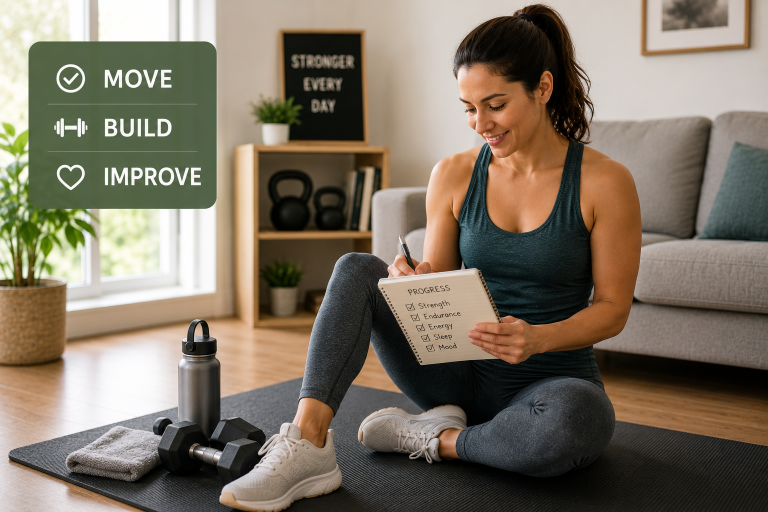
Track simple indicators:
- Number of workouts per week
- Duration of each session
- Small improvements in repetitions
Tracking keeps you engaged and focused.
Building a More Effective Home Workout Routine
Keep It Simple
Avoid overcomplicating your routine. Simple plans are easier to follow consistently.
Stay realistic.
Choose workouts that fit your lifestyle and schedule.
Focus on Daily Habits
Your routine should be sustainable. Consistency matters more than intensity.
Adjust Gradually
Make small improvements over time rather than drastic changes.
Signs Your Home Workouts Are Working
Even if visible changes take time, you may notice:
- Better consistency
- Increased energy
- Improved comfort with exercises
- More structured daily habits
These are clear indicators that your routine is improving.
FAQs
1. Why am I not seeing results from my home workouts?
Common reasons include inconsistency, lack of progression, poor form, and unrealistic expectations.
2. How long does it take to see noticeable results?
Most people begin to notice changes after a few weeks of consistent effort.
3. Do I need equipment for better results?
No. Consistency, structure, and proper technique matter more than equipment.
4. How often should I work out at home?
3–4 times per week is a practical and sustainable starting point.
5. What is the most important factor for success?
Consistency is the most important factor in achieving results over time.
Conclusion
If your home workouts are not showing results, it doesn’t mean your effort is wasted—it means your approach needs refinement.
Most issues are not major problems. They are small, manageable gaps in consistency, structure, or expectations.
By focusing on simple improvements—staying consistent, tracking progress, maintaining proper form, and building a realistic routine—you can turn your efforts into meaningful results.
The key is not doing more but doing things more effectively.
Stay consistent, stay patient, and allow your routine to develop over time. Progress may feel slow at first, but with the right approach, it becomes steady and reliable.